
Yes, you can charge an electric car with solar panels on your garage roof — and for the right home it is a genuinely smart combination. But a small garage array has real limits that a salesperson probably won't mention upfront, so it's worth knowing exactly what you're getting before you spend a penny.
Why a garage-roof solar array with an EV charger appeals
If you park your car next to or inside a garage, the logic is tidy: put the panels above the car, run a short cable to a solar-compatible EV charger on the garage wall, and let the sun top up your battery for free. The EV charger sits right underneath the generation source, cable runs are short, and you avoid putting anything on the main house roof if it faces the wrong way or has awkward features like skylights or chimneys.
There is also a cost angle. A smaller garage-based system typically involves simpler scaffolding and access, and installers often quote it at a lower per-kWp price than a main house roof job. It is a real option — not a gimmick — but it comes with constraints you need to understand before committing.
If you are also weighing up the full solar-plus-EV question for your main roof, our guide to solar panels and EV charger combos covers that broader picture.
How many solar panels do I need on my garage to charge an EV?
More than most garages can fit — if your goal is to cover all your EV charging from the panels alone. A typical UK driver covers around 10,000 miles a year. An average EV needs roughly 3–4 miles per kWh, so that's around 2,500–3,300 kWh of electricity per year just for driving. Even a generously sized 4 kWp array generates roughly 3,400 kWh annually in the UK on a good south-facing pitch — and that electricity has to cover house loads too.
A single-garage roof often holds 6–10 panels, giving you a 2–3 kWp system. That produces around 1,700–2,500 kWh a year. You will not cover your entire EV charging bill from that alone — but you do not need to for the investment to make sense. Every kWh of solar that goes directly into your car instead of the grid is a unit you are not buying at the current import rate.
The key metric is self-consumption: how much of what your panels generate do you actually use yourself, rather than export? With a smart EV charger that detects solar surplus and diverts it to your car, self-consumption rates on a garage setup can be high — because the biggest load (your EV) is physically sitting right next to the panels during the day when generation peaks.
For a fuller look at sizing a solar system around an EV, see our guide on solar panel size if you have an EV, heat pump or work from home.
What does a garage solar and EV charger setup actually cost?
A 2–3 kWp system on a garage roof (6–8 panels) typically costs in the region of £3,200–£5,500 installed, according to installer price data — broadly 10–15% less than the equivalent system on a main house roof, largely because access and scaffolding are simpler on a low single-storey structure. Add a solar-compatible smart EV charger (such as a Zappi, Ohme or Hypervolt) and you are looking at a further £700–£1,200 installed, bringing a typical combined budget to around £4,000–£6,700.
There is one extra cost specific to a detached garage: the cable run from the garage back to the house consumer unit. Depending on distance and whether the cable needs to go underground, this adds roughly £300–£800 to the quote. Always confirm this with the installer before agreeing a price.
The good news on VAT: according to HMRC's VAT Notice 708/6, the 0% VAT rate on qualifying residential solar and battery installations runs until 31 March 2027, then reverts to 5%. That means on a £5,000 system you save £250 versus the post-2027 rate — a modest but real benefit to booking before the deadline. Our guide to 0% VAT on solar panels and the March 2027 deadline explains what is covered in full.
Note: EV chargers themselves are not covered by the 0% VAT relief — they remain subject to standard 20% VAT. This is worth factoring into your budget comparison.
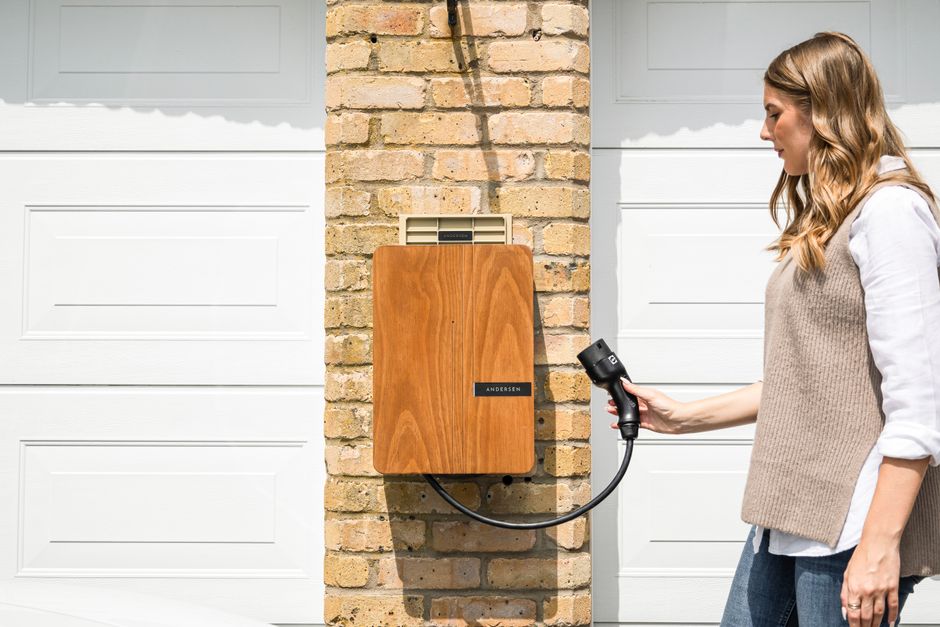
Is it worth putting solar on a garage for EV charging — a worked example
Take a homeowner with a detached garage, a south-facing garage roof, and an EV they drive around 8,000 miles a year. They install a 3 kWp system (7–8 panels) and a solar-divert EV charger. Here is what the numbers might look like — this is an illustrative example, not a guaranteed outcome, as results vary by location, roof pitch, driving habits and energy use.
- Annual generation (3 kWp, south-facing, UK average): ~2,500 kWh
- Estimated EV charging need (8,000 miles): ~2,000–2,700 kWh/yr
- Solar self-consumed by EV charger (illustrative, ~50% of generation): ~1,250 kWh
- Saving on EV charging at current import rates: potentially £300–£350/yr
- Remaining generation used in the home or exported via SEG: ~1,250 kWh
- Approximate all-in cost (panels + smart charger + cable run): £5,000–£6,500
At a combined saving of, say, £500–£700 a year (EV charging plus household bill reduction and modest SEG export income), a rough payback of 8–12 years is plausible — though your actual figures will depend on your roof direction, shading, driving pattern and which SEG tariff you choose. Ofgem's energy price cap affects the import rate your savings are calculated against, so it is worth checking the current level.
On SEG: under the Smart Export Guarantee, any electricity you export is paid for by your supplier. Flat-rate SEG tariffs in 2026 range from around 4p to 15p per kWh depending on the supplier and conditions. Because self-consuming electricity (saving ~24–25p/kWh at current import rates) is worth roughly twice as much as exporting it at the average tariff, the priority for a garage setup should always be maximising what the car absorbs directly.
What roof direction and space do you actually need?
South-facing is ideal and will give the best generation figures. East- or west-facing garage roofs still work — expect roughly 15–20% less annual output than a true south pitch. A north-facing garage roof is generally not worth the investment; the drop in generation makes the payback period uncomfortably long for a small array.
A standard single garage has a roof area of roughly 15–20 m². Modern panels are typically 1.7–1.8 m² each, so most single-garage roofs can fit 6–8 panels (a 2.4–3.2 kWp system) before hitting space limits. A double garage opens up to 10–14 panels and starts to look more like a proper household system.
Shading is especially important on a small array. On a larger house roof you can use microinverters or optimisers to limit the damage a chimney shadow does to one panel. On a 6-panel garage array, if a tree or fence post shades two panels for several hours a day, you lose a significant share of total output. Walk around your garage at midday in summer and winter and honestly assess what might cast a shadow.
Planning permission — do you need it?
For most homeowners, no. Solar panels on a garage or other outbuilding within your property's curtilage are treated under the same permitted development rules as panels on the main house: no planning application is required provided the panels do not protrude more than 200mm from the roof surface and do not exceed the highest point of the roof. The exceptions are listed buildings and some conservation areas — if either applies to you, check with your local planning authority before proceeding.
When the garage solar and EV combo is NOT the right answer
Honest answer: there are situations where you would be better off spending the money differently.
Your garage roof faces north. Generation will be too low to justify the investment. Consider ground-mounted panels instead — our ground-mounted solar guide covers that route.
You charge your EV mainly overnight. A solar-divert charger needs daylight to function. If you plug in at 11pm and unplug at 6am, the solar surplus never reaches the car — you would be paying for a smart charger that provides little benefit over a standard timed charge on a cheap overnight tariff.
Your main house roof is available and south-facing. A larger array on the house roof will almost always produce more electricity, give a better payback and qualify for the same 0% VAT. The garage-only route makes most sense when the house roof is genuinely unsuitable — wrong orientation, heavy shading, structural concerns, or a complex layout that makes fitting panels impractical.
The garage is detached and far from the house. A 30-metre underground cable run at £600–£800 can push the overall cost to a point where the payback stretches well beyond 12 years. Get the cable run costed separately before agreeing anything.
Getting the right quote
This is a specific enough setup — garage roof, cable run, solar-compatible EV charger — that you need an installer who has done it before and will quote the whole job, not just the panels. Ask them to confirm the cable route, whether any trenching is needed, and which EV charger they recommend for your inverter brand (some chargers integrate more cleanly with certain inverters for real solar-divert functionality).
Use a comparison service to get quotes from multiple MCS-certified local installers — that way you have a benchmark and can spot any outlier prices. FairSolar connects homeowners with vetted, MCS-certified local installers at no cost to you. Get free, no-obligation quotes here and you can compare them side by side.
Frequently asked questions
Can I charge my electric car with solar panels on my garage roof?
Yes — provided you also install a solar-compatible smart EV charger (such as a Zappi, Ohme or Hypervolt) that detects when your panels are generating a surplus and diverts it to the car automatically. Without a smart charger, your car will still draw solar electricity, but you won't be able to control the balance between solar and grid import.
How many panels can fit on a single garage roof?
A typical single-garage roof (around 15–20 m² of usable space) can hold roughly 6–8 modern solar panels, giving a system of around 2.4–3.2 kWp. A double garage can fit 10–14 panels and starts to produce output more comparable to a standard house system. Always ask your installer to measure the actual usable area after accounting for any obstructions.
Is a garage solar system covered by the 0% VAT relief?
Yes, as long as it's installed on a domestic property — the garage must be within the curtilage of your home. HMRC's VAT Notice 708/6 confirms the 0% rate on qualifying residential solar installations until 31 March 2027, after which it reverts to 5%. Note that the EV charger itself is not covered by this relief and is charged at 20% VAT.
What if I charge my car overnight — will garage solar still help?
Only partially. A solar-divert charger works by redirecting daytime generation surplus into your car, so if you only ever charge overnight, you won't benefit from the solar-divert feature. You could still benefit from the panels reducing your household electricity bill during the day — but if overnight charging is your main pattern, a cheap overnight energy tariff combined with a simpler timed charger may deliver a better return than investing in solar-divert technology specifically for the EV.
Do I need planning permission for solar panels on a detached garage in the UK?
In most cases, no. Solar panels on a garage within your property's curtilage fall under permitted development in England, Scotland and Wales, provided the panels don't protrude more than 200mm from the roof surface or exceed the roof's highest point. Listed buildings and some conservation areas are exceptions — always check with your local planning authority if either applies to you.